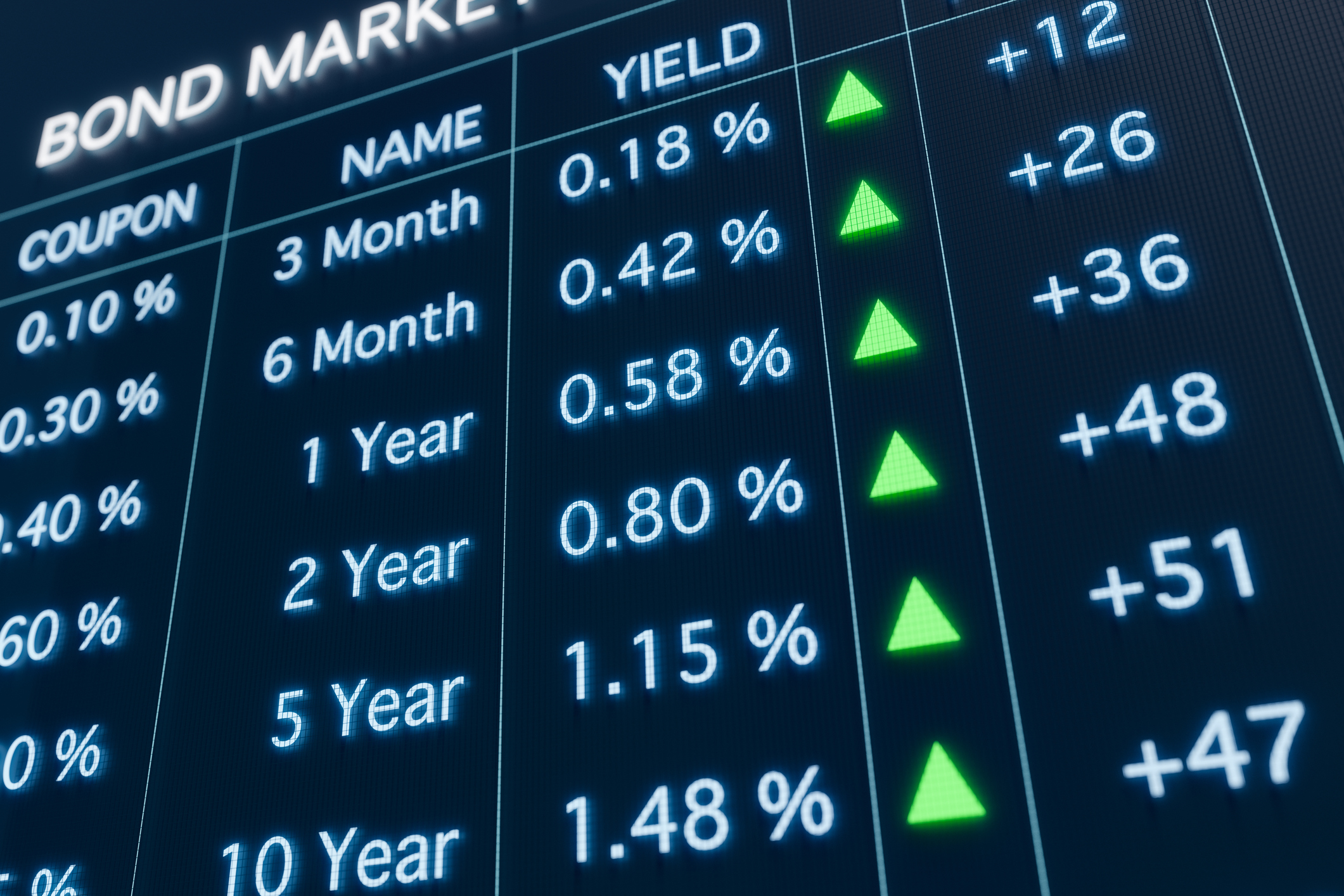
When companies and governments need to raise money, they have several options. One of the most common is issuing bonds. Bonds are a major part of the global financial system and play an important role in everything from government spending to corporate expansion and investment portfolios.
For investors, bonds can provide regular income and help diversify a portfolio. But understanding how bonds work requires knowing what happens when a bond is issued, how investors earn money from it, and why bond prices can change after the bond enters the market.
What Is a Bond?
A bond is essentially a loan made by an investor to a borrower.
The borrower can be a government, municipality, company, or other organization. In exchange for providing money, the investor typically receives periodic interest payments and the return of the original amount when the bond reaches its maturity date.
For example, suppose a company issues a five-year bond with a face value of $1,000 and a 5% annual interest rate. An investor who purchases the bond would generally receive $50 per year in interest. At the end of five years, the company would repay the $1,000 principal, assuming it does not default.
This makes bonds different from stocks. When you buy a stock, you generally become a partial owner of a company. When you buy a bond, you are lending money to the issuer.
How Does the Bond Market Work?
The bond market is where bonds are issued and traded.
It has two major parts: the primary market and the secondary market.
In the primary market, a government or company sells newly issued bonds to investors to raise money. The proceeds go directly to the issuer.
In the secondary market, investors trade bonds that have already been issued. The original issuer generally does not receive money from these transactions. Instead, investors buy and sell bonds among themselves.
This secondary market is important because it allows investors to sell bonds before they mature rather than having to hold them until the repayment date.
How Investors Make Money From Bonds
There are two main ways investors can potentially earn money from bonds.
The first is through interest payments, often called coupon payments. These payments are usually made according to a fixed schedule, such as twice a year.
The second is through changes in the bond’s market price.
Suppose an investor buys a bond for $1,000 and later sells it for $1,050. The investor has made a $50 capital gain, excluding interest and transaction costs.
However, bond prices can also fall. Selling the same bond for $950 would result in a $50 capital loss.
This means bonds are not automatically risk-free investments simply because they make regular interest payments.
What Is a Bond’s Face Value?
A bond’s face value, also called par value, is the amount the issuer promises to repay when the bond matures.
Many bonds have a face value of $1,000, although actual denominations can vary.
Face value is different from the bond’s market price. A bond with a $1,000 face value might trade for $950, $1,000, $1,050, or another amount depending on market conditions.
This distinction is important because the price investors pay for a bond affects the return they actually receive.
What Is a Bond’s Coupon Rate?
The coupon rate is the interest rate used to calculate the bond’s scheduled interest payments.
For example, a $1,000 bond with a 6% coupon rate would generally pay $60 per year in interest.
However, the coupon rate does not necessarily tell you the return an investor will earn if the bond is purchased on the secondary market.
If the bond trades for less than $1,000, the investor’s potential yield can be higher than the coupon rate. If it trades above $1,000, the yield can be lower.
This is one reason investors pay close attention to yield, rather than looking only at the coupon rate.
Why Do Bond Prices Change?
Bond prices can change significantly after they are issued.
One of the biggest factors is the level of interest rates in the broader economy.
Imagine you own a bond paying 3% interest, while newly issued bonds with similar risk begin paying 5%. Your existing bond becomes less attractive because investors can potentially receive more income from newer bonds.
As a result, the market price of your 3% bond may fall.
The opposite can happen when interest rates decline. Existing bonds with higher interest payments can become more attractive, potentially pushing their market prices higher.
This relationship between bond prices and interest rates is one of the most important concepts in fixed-income investing.
Who Issues Bonds?
Governments are among the largest bond issuers.
National governments issue bonds to help finance public spending, infrastructure, budget deficits, and other obligations. Local governments can also issue bonds to fund projects such as schools, transportation systems, and public facilities.
Companies issue corporate bonds to raise money for activities such as expansion, acquisitions, research, equipment purchases, or refinancing existing debt.
Different issuers carry different levels of credit risk. A financially strong government may be viewed as a lower-risk borrower than a highly indebted company.
What Is Credit Risk?
Credit risk is the possibility that a bond issuer will fail to make required interest or principal payments.
Credit rating agencies assess the financial strength and creditworthiness of many bond issuers and assign ratings intended to help investors evaluate this risk.
Generally, bonds with higher credit quality are considered less risky from a default perspective. Lower-quality bonds may offer higher potential yields because investors demand additional compensation for taking on greater risk.
This is why a bond offering a very high interest rate is not necessarily a better investment than one offering a lower rate.
Why Do Investors Buy Bonds?
Investors may use bonds for several different reasons.
One is income. Bonds can provide scheduled interest payments, which can be useful for investors seeking predictable cash flow.
Another is diversification. Bonds may behave differently from stocks, although the relationship between the two asset classes can change depending on economic conditions.
Investors may also use government bonds or other high-quality bonds to reduce the overall risk of a portfolio.
The appropriate mix depends on factors such as investment goals, time horizon, income needs, and tolerance for risk.
The Risks of Investing in Bonds
Bonds have risks that investors need to understand.
Interest-rate risk occurs when changing interest rates affect the market value of existing bonds.
Credit risk is the possibility that an issuer cannot meet its financial obligations.
Inflation risk occurs when rising prices reduce the purchasing power of future interest payments and principal repayments.
There can also be liquidity risk, particularly for bonds that are not frequently traded.
A bond can therefore be more predictable than a stock in some respects while still carrying meaningful investment risk.
Why the Bond Market Matters
The bond market is much more than a place where investors search for income. It is an important source of financing for governments and businesses and plays a major role in the broader financial system.
Bond yields also provide information about market expectations surrounding interest rates, inflation, economic growth, and credit conditions.
For investors, understanding bonds provides a foundation for understanding interest rates, the yield curve, monetary policy, and many of the forces that influence financial markets.
Whether someone invests directly in individual bonds or through bond funds and exchange-traded funds, understanding how bonds are priced and traded can make it easier to evaluate risk and potential returns.
Leave a Reply