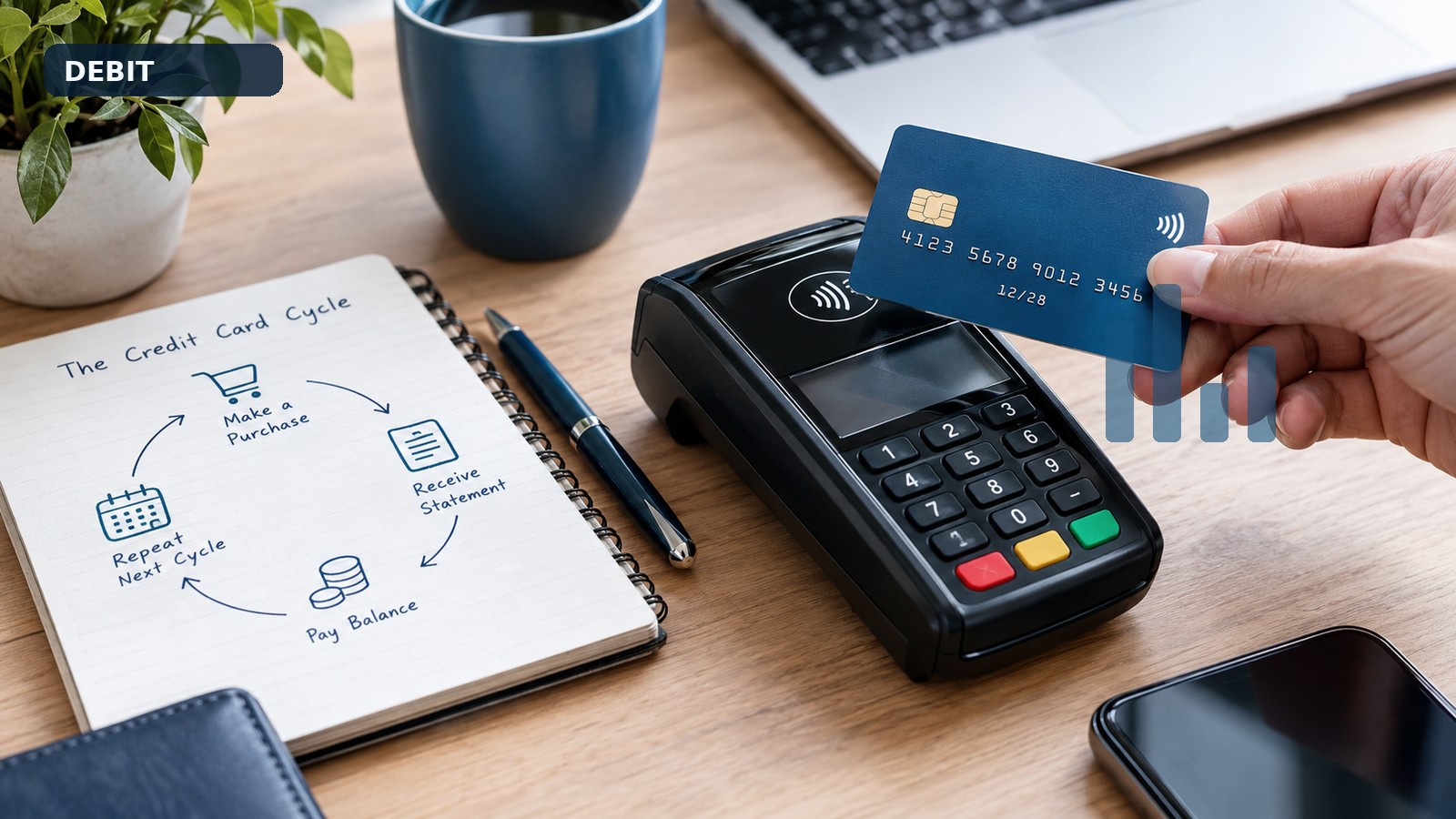
How Debit Cards Work and When to Use One
A debit card is linked to a bank account and is generally used to access money you already have rather than borrowing through a revolving credit line.
Debit versus credit
When a debit purchase is processed, funds are typically taken from the linked account. A credit card purchase creates a balance that you later repay. This distinction makes debit cards useful for people who want spending to remain closely tied to their available cash.
Budgeting advantages
Because spending is connected to a bank balance, debit cards can make it easier for some people to avoid accumulating credit card debt. However, the ease of card payments can still encourage overspending, so a budget remains important.
Fees and limits
Check for ATM fees, foreign transaction charges, daily spending limits, and other account-specific costs. Fee structures vary significantly between banks and account types.
Security matters
Treat a debit card as access to real funds. Use account alerts, protect your PIN, avoid suspicious ATMs, and report unauthorized transactions quickly.
When credit may be preferable
Credit cards can provide different protections, rewards, and payment flexibility. The right choice depends on the transaction and your ability to manage credit responsibly.
A debit card is not automatically safer or better than a credit card. It is simply a different financial tool. The best option depends on how you budget, how you travel, what protections matter to you, and how comfortable you are managing a credit balance.